Blogia

La Bitácora del Dr. Ucha

Apuntes sobre la historia de la ISSP.

Apuntes sobre la historia de la ISSP.

Tony Morris, Dieter Hackfort1, y Ronnie Lidor, han hecho un trabajo muy bien elaborado y preciso de la historia del ISSP desde el encuentro de Antonelli con el Papá al inicio de la organización de la ISSP hasta los primeros treinta años de la ISSP. Parte de las notas que aparecen aquí las he traducido de ese trabajo y de las experiencia anteriores con miembros de la ISSP, además del Internacional Journal of Sport Psycholoy (IJPS), de el trabajo desarrollado sobre la Historia de la Psicología del Deporte por parte de Singer y de Cruz Feliu.

Tuve la oportunidad de conocer a Singer, Vanek Fujita, Balague y Salmela estos últimos en un Congreso Internacional de Psicología del Deporte en Belo Horizonte en el año 1990.

Schellenberger, estuvo en nuestro país en los años 80, de igual modo, Singer fue invitado la Habana a un Congreso en 1991.

Muchos amigos de una forma u otra han estado involucrados en las actividades de la ISSP, mis profesores: Chudadov, Rodionov, Salmela, Samulski, Lars Erick Unestahl. Colegas como Dellamary, Bob Brustab y Tennebaum.

Representantes de Cuba estuvieron en dos congresos realizados por al ISSP. Uno en Madrid donde asistió uno de los pioneros de la Psicología del Deporte en Cuba el Doctor Osmell Martínez y también participo un delegado en el congreso de Praga en 1977.

Finalmente como profesor de la asignatura Historia de la Psicología del deporte Contemporánea de la Maestría de Psicología del deporte que imparte el ISCF "Manuel Fajardo", estoy permanentemente pendiente de la historia de muchas organizaciones científicas y de los hechos y avatares de la Psicología del Deporte en el ámbito mundial.

Actividad que no es puramente teórica ya que me encuentro entre los que fundamos la Sociedad Iberoamericana de Psicología del Deporte de la cual soy uno de sus, Vicepresidente para Centroamérica y el Caribe.

El primer acto de la ISSP fue la conferencia que organizará Ferruccio Antonelli en Roma en el año 1965. Este evento llegó a asistir unas 450 personas del mundo. Puede señalarse que ya el área de la Psicología del deporte ocupaba un lugar en literatura sobre deporte y había dado respuesta a alguna de las alternativas de la actividad produciendo sus primeros impactos. Esto facilito su reconocimiento y la necesidad de formar una Sociedad que representara la especialidad. Fue allí que nació la ISSP.

La ISSP tiene como antecedente a Salmela y Hombravella, quienes pensaron en fundar esta organización en 1960. Ambos eran miembro de la Sociedad Internacional de Medicina del Deporte, el ímpetu de la primeras investigaciones y al actividad de los especialistas en psicología del deporte había causado un impacto en la (FIMS).

El propio Hombravella propuso como presidente de la ISSP a Antonelli y así comenzaron la organización del primer encuentro en Roma en 1965.

Antonelli nombro a Hombravella como Secretario, y Slater-Hammel (USA), Perie (Francia), Recla (Austria), Kunath (Republica Democrática Alemana), Olsen (Noruega), y Johnston (USA) fueron propuestos como MC miembros.

Los primeros tres presidentes de la ISSP fueron Profesor Ferruccio Antonelli (Italia), Profesor Miroslav Vanek (Republica Checoeslovaca), y el Profesor Robert Singer (USA). También, el Profesor Hermann Rieder (Alemania), fue el Secretario General del ISSP por un largo periodo, Profesor Ema Geron (Israel, formalmente por  Bulgaria) y Profesor Atsushi Fujita (Japón),

El segundo congreso de la ISSP se efectuó en 1968 en Washington, D.C. y tuvo por lema "La dimensión social del deporte". El consejo de la organización fue enriquecido por la presencia de Balague (España), Fujita (Japón), Guenov (Bulgaria), Geron (Israel), y Unestahl (Suecia).

El tercer congreso se realizo en Madrid en 1973 el lema del congreso fue "Rendimiento humano y Psicología del Deporte"

El cuarto congreso se celebro en Praga en 1977 con el lema de "Investigaciones de Personalidad en el Deporte". En este congreso fue reelecto Presidente Vanek que ya habían nombrado en Madrid, aquí fue electo Kane como Vicepresidente, Rieder fue Secretario General, y Harris era la Tesorera de la Sociedad.

El consejo de dirección de la Sociedad estuvo formado por Chudadov (USSR), Salmela (Canadá), Matsuda (Japón), Rokusfalvy (Hungria), Singer (USA), Schellenberger (Alemania del Este), Allawy (Egipto), Martínez (Cuba), Harris (USA), López (Venezuela), Jones (Australia), y Olszewska (Polonia).

El quinto congreso se efectuó en Ottawa en 1981 bajo el lema de "Entrenamiento y Personalidad".

El sexto congreso se efectuó en el año 1985 en Copenhagen "Aprendizaje motor y Personalidad".

Para el séptimo congreso en el año 1989 se escogió realzarlo en Singapore  "Bienestar y ejercicio".

En 1993 se acometió el octavo congreso en Lisboa "Una perspectiva integrada".

Fue en 1997 que se realizo el noveno congreso en  Natanya. Israel "Enlazando la teoría y la práctica"

Seguidamente en 2001 se celebro el décimo congreso en  Skiathos con el lema de "En los albores de un nuevo milenio"

Hacia el año 2005 se efectuó en Sydney Australia.

Y el doceno congreso se llevará a cabo en Marruecos en 2009.

Para muchos el establecimiento de la ISSP estimulo de una manera u otra la creación de sociedades tales como:

1965 Internacional Association of Sport Psychology

1967 Bristh Association of Sport and Exercise Sciences

1967 la North American Society for the Psychology of Sport and Physical Activity (NASPSPA)

1968 European Federation of Sport Psychology

1985 Division 47 Sport Psychology and Exercise American Association of Applied Psychology

1986 Association for the Advancement of Applied Sport Psycology

La importancia del desarrollo de una ciencia depende de determinados parámetros de los cuales señalaré en este momento los siguientes: la creación de organizaciones científicas que le brinden una personalidad institucional y permitan el desarrollo de la actividad científica, su divulgación y el incremento del volumen de los conocimientos sobre su objeto de estudio.

Referencias

Cruz Feliu, J. La Psicología del Deporte: Definición, evolución y relación con las demás ciencias de la actividad física y el deporte. Apunts Educacio Fisica i Esports, 1990, 22. p. 11‑20.

Cruz, J. 'Historia de la Psicología del Deporte', En Psicología del Deporte: Aplicaciones y perspectivas. Riera, J. Cruz, J. Ed. Martínez Roca, Barcelona 1991.

García Ucha, F. Psicología del Deporte. Enfoque cubano. Editado y distribuido por: Lyoc S.R.L. Argentina. (1997).

Morris1, T. Dieter Hackfort1, , & Ronnie Lidor, From Pope to Hope: The First Twenty Years of ISSP. www.issponline.org/documents/History_of_ISSP

Salmela, J. (1997a). The Antonelli years of the ISSP. In R Lidor & M. Bar-Eli (Eds.).Proceedings of the 9th World Congress of Sport Psychology (pp. 596-598). Netanya, Israel:ISSP.

Salmela, J. (1997b). The International Journal of Sport Psychology (1970-1973). In R Lidor & M. Bar-Eli (Eds.) Proceedings of the 9th World Congress of Sport Psychology.(pp. 599-601). Netanya, Israel: ISSP.

Schilling, G. State of the art Review of Sport Psychology. Sport Science Review. Vol. 1, N. 2 1992 p.1-12

Schinke, R. J., David Hancock, and Nicole G. Dubuc Robert ,J. Schinke and Kim D. Dorsch Looking to the Future of Sport Psychology: An Introduction

http://www.athleticinsight.com/Vol8Iss3/IntroFuture.htm

Schinke, R. J., Michel, G., Danielson, R., & Gauthier, A. (2005). Introduction to cultural sport psychology. Athletic Insight, Available on the World Wide Web: http://www.athletinsight.com/Vol7Iss3/Introduction.htm

Singer, R. Applied Sport Psychology in the United States. Applied Sport Psychology, 1, 61-80 (1989).

Vanek, M. (1993). Reflections on the inception, development, and perspectives of ISSP's image and self-image. In S. Serpa, J Alves, V Ferreira, & A Paula-Brito (Eds.) Proceedings of the 8th World Congress of Sport Psychology (pp. 154-158). Lisbon, Portugal: ISSP.

Index bibliographical

Small Group Research, Vol. 36, No. 2, 166-187 (2005)

DOI: 10.1177/1046496404266715

© 2005 SAGE Publications

Exploring the Potential Disadvantages of High Cohesion in Sports Teams

James Hardy

Mark A. Eys

Albert V. Carron

University of Western Ontario

In the present study, a heterogeneous sample of 105 athletes (mean age = 21.4 years) was used to gain insight into the potential negative consequences of high team cohesion. Athletes were asked open-ended questions relating to the potential disadvantages of high task and high social cohesion. It was found that 56% of athletes reported possible disadvantages to high social cohesion, whereas 31% of athletes reported possible disadvantages to high task cohesion. Furthermore, data analyses revealed multiple dimensions of negative consequences for both high task and social cohesion. More specifically, analysis of responses revealed both group- and personal-level consequences. The findings contrast with the popularly held view that high cohesion is always beneficial for teams and team members. It was suggested that future research assess the prevalence and importance of the disadvantages of high cohesion.

Key Words: cohesion • sport • athletes • consequences

Small Group Research, Vol. 28, No. 2, 294-301 (1997)

DOI: 10.1177/1046496497282006© 1997 SAGE Publications

Cohesion and Work Output

Harry Prapavessis

University of Auckland

Albert V. Carron

University of Western Ontario

The purpose of this investigation was to examine the relationship between group cohesion and individual work output (effort) in sport teams. Results showed that athletes who scored high on the Individual Attractions to the Group Task (AGT-T) Scale from the Group Environment Questionnaire (GEQ) worked harder (predicted from a bag of expired air at the end of training and expressed as apercentage relative to the maximal volume of oxygen consumption) than athletes who scored low on the ATG-T The results extend previous research that has shown that cohesion is positively associated with individual adherence in sport teams and exercise classes. Recommendations forfu

Small Group Research, Vol. 36, No. 5, 539-554 (2005)

DOI: 10.1177/1046496405275229

© 2005 SAGE Publications

Using a Multilevel Approach to Examine the Relationship between Task Cohesion and Team Task Satisfaction in Elite Ice Hockey Players

Kevin S. Spink University of Saskatchewan,

Darren Nickel University of Saskatchewan

Kathleen Wilson University of Saskatchewan

Pat Odnokon University of Saskatchewan

Of numerous studies conducted over the years examining cohesion in the sport setting, very few have acknowledged that participants are nested within teams, which has resulted in analysis of data at the individual level. Given that members of sport teams are interdependent, valuable information might be lost if constructs such as cohesion are examined only at an individual level. The purpose of this study was to illustrate how multilevel modeling could be used to handle this interdependence among observations within teams when examining the relationship between task cohesion and team satisfaction. Male ice hockey players (N = 194) on 10 teams completed the cohesion and satisfaction measures near the end of the regular season. Using multilevel analysis, task cohesion predicted variance in team task satisfaction at the individual (33%) and group (55%) levels. Results highlight the value of multilevel models as well as extend research finding a relationship between cohesion and individual satisfaction to team satisfaction.

Key Words: multilevel • Group Environment Questionnaire • team satisfaction • group level

Small Group Research, Vol. 32, No. 1, 3-18 (2001)

DOI: 10.1177/104649640103200101

© 2001 SAGE Publications

Team Cohesion and Individual Productivity

The Influence of the Norm for Productivity and the Identifiability of Individual Effort

Kimberley L. Gammage University of Western Ontario

Albert V. Carron University of Western Ontario

Paul A. Estabrooks Kansas State University

This study investigated the potential moderating effects of productivity norms and identifiability of effort on the cohesion-performance relationship in team sports. The design was a 2 (high cohesion, low cohesion)x2 (high productivity norm, low productivity norm)x2 (high identifiability of an individual's effort, low identifiability of an individual's effort) factorial. Each participant (n = 324) read one of eight scenarios, with cohesion, norms, and identifiability systematically rotated, and indicated the probability that the individual would train during the off-season. An ANOVA showed a main effect for cohesion, F(1, 316) = 113.44, p < .0001, and norms, F(1, 316) = 19.61, p < .0001), and an interaction between cohesion and norms, F(1, 316) = 7.35, p = .007. The probability of off-season training was significantly higher for the high-cohesion-high-norms scenario than for the high-cohesion-low-norms scenario, with no differences under conditions of low cohesion. Directions for future research are discussed.

DOI: 10.1177/1046496406294545

© 2006 SAGE Publications

Member Diversity and Cohesion and Performance in Walking Groups

Kim M. Shapcott

Albert V. Carron

Shauna M. Burke

University of Western Ontario, London, Canada

Michael H. Bradshaw Kansas State University, Manhattan

Paul A. Estabrooks Kaiser Permanente Colorado, Denver

The purpose of the study was to examine the relationship of group member diversity in task-related attributes (i.e., self-efficacy, level of previous physical activity, and personal goals) and task-unrelated attributes (i.e., ethnicity and gender) to task cohesiveness and task performance in walking groups (N varied from 1,324 to 1,392 groups for the analyses). For the task-related attributes, diversity in level of previous physical activity was significantly related to both task cohesion and group performance-as diversity increased, cohesion and performance decreased. For the task-unrelated attributes, diversity in gender was related to task cohesion-as diversity increased, cohesion decreased. Gender diversity was unrelated to group performance. The results are discussed in terms of their implications for the dynamics of task-oriented groups.

Key Words: goals • self-efficacy • physical activity • group composition

 taskoriented groups • gender • ethnicity

Small Group Research, Vol. 37, No. 3, 217-232 (2006)

DOI: 10.1177/1046496406287311

© 2006 SAGE Publications

The Relationship Between Group Cohesion, Group Norms, and Perceived Social Loafing in Soccer Teams

Rune Høigaard Agder University College,

Reidar Säfvenbom Norwegian School of Sport Sciences

Finn Egil Tønnessen University of Stavanger

The purpose of this study was to examine the relationship between group cohesion, group norms, and perceived social loafing among 118 soccer players playing junior league in Norway. Each player completed a questionnaire assessing group cohesion (task cohesion and social cohesion), team norms (productive norms, role involvement, and social support norms), and perceived social loafing. As predicted, all cohesion- and team-norm subscales were negatively correlated with perceived social loafing. Furthermore, the results showed that the players' attraction to their team's task as well as their perception of the productive- and social-support norm predicted perceptions of social loafing. A significant three-way interaction between task cohesion, social cohesion, and performance norm emerged. The analysis showed that the combination of high social cohesion, low task cohesion, and low team norms seems to underlie perceptions of social loafing.

Key Words: group cohesion • team cohesion • perceived social loafing

Small Group Research, Vol. 32, No. 5, 576-594 (2001)

DOI: 10.1177/104649640103200504

© 2001 SAGE Publications

Situational Coaching Styles

The Impact of Success and Athlete Maturity Level on Coaches' Leadership Styles Over Time

Paul D. Turman University of Northern Iowa

This investigation examines athletes' preferences and perceptions and coaches' perceptions of leadership styles used throughout an athletic season. The review of literature identified an existing limitation to current examinations of coaching styles. Past researchers failed to include time as a potential variable affecting athletes' preferences and perceptions of their coaches' use of five leadership styles: autocratic, democratic, social support, positive feedback, and training and instruction. The participants for this study included 155 varsity wrestlers and 17 coaches. Athletes and coaches completed instruments three times during the season, and repeated measures procedures computed for the two primary research questions indicated significant differences for each. When examining the impact of athlete experience level, results indicated only athletes' perceptions of their coaches' social support styles are affected by the athletes' experience level across time. Also, athletes' perceptions of their coaches' autocratic leadership styles for successful and unsuccessful teams were significantly different at the end of the season.

International Review for the Sociology of Sport, Vol. 13, No. 2, 51-65 (1978)

DOI: 10.1177/101269027801300204

© 1978 International Sociology of Sport Association and SAGE Publications

Role Behavior and the Coach-Athlete Interaction

Albert V. Carron

The characteristic role behaviors for both coaches and athletes in the athletic situation in the need areas of inclusion, control and affection were defined by coaches (N=40). Two modified versions of Schutz's FIRO-B were utilized. The results indicated that coaches and athletes were in complete agreement concerning the perceived role behaviors for both coaches and athletes. Coaches were perceived as the initiators of control; athletes, the recipients. Both coaches and athletes were perceived as being relatively passive in regards to initiating interactions (inclusion behavior) and de veloping warm personal relations (affection behavior). These latter two characteristics could contribute naturally to an incompatibility in the coach-athlete interaction.

NASSP Bulletin, Vol. 60, No. 403, 36-41 (1976)

DOI: 10.1177/019263657606040305

© 1976 National Association of Secondary School Principals

The Principal as Coach

Kenneth L. Fish

Roosevelt High School, Yonkers, N. Y.

School leaders, Fish notes, may be able to profit from a closer look at the coach's bag of tricks to see what they can apply to their own work in developing staff commitment.

The Journal of Early Adolescence, Vol. 21, No. 2, 228-248 (2001)

DOI: 10.1177/0272431601021002005

© 2001 SAGE Publications

Goal Orientations of Adolescents, Coaches, and Parents:

Is there a Convergence of Beliefs?

Karen B. Givvin University of California, Los Angeles

The relations between the goal orientations of adolescents and those of their coaches and parents were examined in this study. Ninety swimmers, 12 through 15 years of age, coaches (N = 10), and parents (N = 71) completed the Task and Ego Orientation in Sport Questionnaire (TEOSQ) with regard to the adolescents' participation in swimming. Adolescents completed the TEOSQ two additional times: once as they thought their coaches would respond and again as they thought their parents would respond. The self-reported goal orientations of adolescents were correlated highly with their perceptions of the goal orientations of their significant adults but not with the self-reports of significant adults. Adolescents believed that the way they thought and felt about their swimming was more affected by their coaches than by their parents. Comparisons of goal orientations across gender and suggestions for further studies are discussed.

Journal of Sport & Social Issues, Vol. 21, No. 2, 134-155 (1997)

DOI: 10.1177/019372397021002003

© 1997 SAGE Publications

MALE COACH/FEMALE ATHLETE RELATIONS: GENDER AND POWER RELATIONS IN COMPETITIVE SPORT

Alan Tomlinson

Ilkay Yorganci

This article reports participation observation evidence, questionnaire survey, and in-depth interview data in an examination of the male coach / female athlete relationship in competitive sport. Focusing on athletics in the United Kingdom, the authors demonstrate the gendered nature of female athlete / male coach relationships, and the dynamics of power and control that contribute to the nature and perpetuation of those relationships. The vulnerability of the young female athlete in the coaching situation is identified, as that vulnerability is manifest in a variety of forms of sexist practice and sexual harassment. The article points to the complexity and normalcy of the organizational sexuality characteristic of the sports culture and the forms of domination and control that can be exerted by the coach. Sports professionals are urged to recognize the serious implications of the gender and power relations underpinning the male coach / female athlete dynamic in competitive sport.

Management Learning, Vol. 37, No. 4, 475-497 (2006)

DOI: 10.1177/1350507606070221

© 2006 SAGE Publications

Executive Coaching: Towards a Dynamic Alliance of Psychotherapy and Transformative Learning Processes

David E. Gray University of Surrey, UK

Coaching is emerging as a major professional development and performance enhancement process. There are, however, few professional development programmes aimed at coaches themselves, and no internationally recognized qualification or professional standard. Much of the literature on coaching has been written by those with a human psychology perspective, and particularly psychotherapeutic approaches to support. Yet some psychotherapeutic processes assume longer term relationships between the coach and the coachee. Many businesses and managers themselves, however, seek focused solutions to immediate problems. This article offers adult learning theory, and specifically transformative learning, as an alternative or parallel theoretical model for underpinning the coaching processes. All coaches, however, need to be aware that the coaching process may open up deep-seated anxieties, some of which are more appropriately addressed by a psychotherapeutic approach. Hence, a dynamic network model of coaching is proposed, in which psychotherapists and non-therapists collaborate to facilitate their mutual professional coaching development, learning and support.

Key Words: adult learning theory • coaching networks • executive coaching • management learning • psychotherapy • reflection • transformative learning

Advances in Developing Human Resources, Vol. 10, No. 1, 104-121 (2008)

DOI: 10.1177/1523422307310117

© 2008 SAGE Publications

Improving the Evidence Base for Career Development Programs

Making Use of the Evaluation Profession and Positive Psychology Movement

Hallie Preskill School of Behavioral and Organizational Sciences at Claremont Graduate University

Stewart I. Donaldson School of Behavioral and Organizational Sciences, Claremont Graduate University

The problem and the solution. Though much has been written on the topic of career development, the human resource development field has paid little attention to the ways in which career development programs are evaluated.The lack of sound evidence for the effectiveness of career development interventions may be because of the overreliance on Kirkpatrick's ubiquitous evaluation approach or that traditional research methods such as experimental and quasi-experimental designs are not appropriate or feasible in many organizational settings. In this article, we describe the growing profession and practice of evaluation and discuss how the positive psychology movement provides new insights into how career development programs may be evaluated.

Key Words: evaluation • positive psychology • appreciative inquiry

Human Relations, Vol. 56, No. 9, 1131-1154 (2003)

DOI: 10.1177/0018726703569005

© 2003 The Tavistock Institute

A Coach or a Couch? A Lacanian Perspective on Executive Coaching and Consulting

Gilles Arnaud

At a time when competition in the workplace is becoming more and more individual, ruthless and widespread, managers are in turn being solicited more personally. That is why the market for psychologically oriented executive coaching is exploding nowadays. This article aims at extracting the main teachings of this change in perspective, in order to pave the way for a methodology of psychoanalytic coaching, that is directly inspired by the work of Jacques Lacan. The objective of this exploratory form of mentorship is to satisfy the explicit needs of the clients, along with their relational expectations and unconscious desir

Key Words: executive coaching • Lacanian theory • management • psychoanalysis

Human Relations, Vol. 39, No. 12, 1067-1081 (1986)

DOI: 10.1177/001872678603901201

© 1986 The Tavistock Institute

Effects of Different Leader Behaviors under Different Levels of Task Interdependence

Louis W. Fry University of Washington

Steven Kerr University of Southern California

Cynthia Lee Temple University

Three hypotheses were developed and tested relating the moderating effects of interdependence between leader behaviors and satisfaction and performance. Results from a survey of 419 participants on 22 teams in eight sports revealed strong support for the performance hypotheses, but not for the satisfaction hypotheses. Winning coaches of high interdependence sports teams were described as exhibiting significantly greater leader-initiating structure than losing high interdependence coaches. Also, winning coaches of high interdependence teams exhibited significantly more leader-initiating structure and significantly less leader consideration than winning coaches of low interdependence teams.

European Physical Education Review, Vol. 12, No. 3, 273-287 (2006)

DOI: 10.1177/1356336X06069274

© 2006 North West Counties Physical Education Association, SAGE Publications

A school-based movement programme for children with motor learning difficulty

Juha-Pekka Männistö University of Jyväskylä, Finland

Marja Cantell University of Jyväskylä, Finland; University of Calgary, Canada

Tommi Huovinen University of Jyväskylä, Finland

Libbe Kooistra University of Jyväskylä, Finland; University of Calgary, Canada

Dawne Larkin University of Western Australia, Australia

The study investigated the effectiveness of a school-based movement programme for a population of 5 to 7 year old children. Performance profiles on the Movement ABC were used to classify the children and to assess skill changes over time. Children were assigned to four different groups: motor learning difficulty (n = 10), borderline motor learning difficulty (n = 5), trained controls (n = 9), untrained controls (n = 9). The total programme consisted of 26 weekly sessions. Each one-hour session comprised of structured group play, individualized skill training, and relaxation. The results showed that children with motor learning difficulty improved consistently in the targeted skills. Most importantly, the obtained effects persisted beyond the actual intervention. The findings emphasize the effectiveness of task-oriented approaches in a school-based setting for children with motor learning difficulty.

Key Words: motor learning difficulty • school-based intervention • task-oriented approach

Resúmenes

Resúmenes


Behavior Modification, Vol. 28, No. 2, 182-193 (2004)

DOI: 10.1177/0145445503259399

© 2004 SAGE Publications

http://bmo.sagepub.com/cgi/content/abstract/28/2/182

Improving Athletes' Perspectives of Sport Psychology Consultation A Controlled Evaluation of Two Interview Methods

B. Donohue University of Nevada, Las Vegas

Y. Dickens  University of Nevada, Las Vegas

K. Lancer  University of Nevada, Las Vegas

T. Covassin  Temple University

A. Hash  University of Nevada, Las Vegas

A. Miller  University of Nevada, Las Vegas

J. Genet  University of Nevada, Las Vegas

Although investigations have consistently demonstrated the effectiveness of sport psychology interventions, these methods have been underutilized by athletes. In this study, 124 athletes completed the athletes' Attitudes Toward Seeking Sport Psychology Consultation Questionnaire (ATSSPCQ) and were subsequently randomly assigned to receive one of the two semistructured interview formats. One interview focused on discussing the athlete's experiences in sports, and the other focused on delineating sport psychology and its potential benefits to the athlete. Upon being interviewed, athletes were readministered the ATSSPCQ. Discussing sport psychology and its personal benefits was more effective in enhancing athletes' perception of need for sport psychology than discussing sport experiences. However, neither interview format enhanced athletes'perceptions of openness to discuss personal issues with a sport psychology consultant and tolerance of stigma associated with sport psychology consultation. Indeed, participants who received the discussion of sports intervention reported a significant decrease in personal openness to discuss personal issues relevant to sports psychology from pre- to postintervention. Intervention effects were similar for male and female athletes. Study implications and future directions are discussed in light of these results.

Key Words: sport psychology • intervention • control • motivation • consultation • enlistment

Behavior Modification, Vol. 31, No. 6, 937-957 (2007)

DOI: 10.1177/0145445507303827

© 2007 SAGE Publications

http://bmo.sagepub.com/cgi/content/abstract/31/6/937

Development and Initial Psychometric Evaluation of the Sport Interference Checklist

Brad Donohue  University of Nevada, Las Vegas

N. Clayton Silver  University of Nevada, Las Vegas

Yani Dickens University of Nevada, Las Vegas

Tracey Covassin  University of Nevada, Las Vegas

Kevin Lancer  University of Nevada, Las Vegas

The Sport Interference Checklist (SIC) was developed in 141 athletes to assist in the concurrent assessment of cognitive and behavioral problems experienced by athletes in both training (Problems in Sports Training Scale, PSTS) and competition (Problems in Sports Competition Scale, PSCS). An additional scale (Desire for Sport Psychology Scale, DSPS) was developed to assess the degree to which athletes desire sport psychology assistance in areas that are determined to be problematic. Factor analysis of PSCS items reveals six factors (Dysfunctional Thoughts and Stress, Academic and Adjustment Problems, Injury Concerns, Lack of Motivation, Overly Confident/Critical, Pain Intolerance), accounting for 64% of the total variance. PSTS and DSPS items yield four factors (Dysfunctional Thoughts and Stress, Academic Problems, Injury Concerns, Poor Team Relationships), accounting for 59% and 63% of total variance, respectively. Scores from these scales demonstrate acceptable internal consistency and convergent and discriminative validity. Response patterns of SIC scales are not influenced by gender or athlete type.

Key Words: sport psychology • assessment • psychometric • consultation • attitudes

Behavior Modification, Vol. 30, No. 3, 259-280 (2006)

DOI: 10.1177/0145445503261174

© 2006 SAGE Publications

http://bmo.sagepub.com/cgi/content/abstract/30/3/259

Emotions and Golf Performance An IZOF-Based Applied Sport Psychology Case Study

Alexander B. Cohen

Gershon Tenenbaum

R. William English

Florida State University

A multiple case study investigation is reported in which emotions and performance were assessed within the probabilistic individual zone of optimal functioning (IZOF) model (Kamata, Tenenbaum,& Hanin, 2002) to develop idiosyncratic emotion-performance profiles. These profiles were incorporated into a psychological skills training (PST) intervention, with a focus on three emotional dimensions, that is, arousal, pleasantness, and functionality, and several psychological strategies employed during practice and competition. Two female varsity golfers at a major Division I university in the Southeast participated in the case study during the Spring 2002 season. The PST intervention resulted in enhanced emotional self-regulation skills and improved golf performance. Directions for future research into the IZOF model and implications for practical application of the model are discussed.

Key Words: emotions • performance • sport psychology • individual zone of optimal functioning (IZOF)

Adaptive Behavior, Vol. 14, No. 1, 73-95 (2006)

DOI: 10.1177/105971230601400103
© 2006 International Society of Adaptive Behavior

http://adb.sagepub.com/cgi/content/abstract/14/1/73

Movement Models from Sports Provide Representative Task Constraints for Studying Adaptive Behavior in Human Movement Systems

Keith Davids

Chris Button

School of Physical Education, University of Otago, New Zealand

Duarte Araújo

Faculty of Human Kinetics, Technical University of Lisbon, Portugal

Ian Renshaw

Division of Sport and Recreation, Faculty of Health, Auckland University of Technology, New Zealand

Robert Hristovski

Faculty of Physical Culture, University of St Cyril and Methodius, Republic of Macedonia

Researchers studying adaptive behavior in human movement systems have traditionally employed simplified, laboratory-based movement models in an effort to conserve experimental rigor. Brunswikian psychology raises questions over the representativeness of many of these popular experimental models for studying how movements are coordinated with events, objects, and surfaces of dynamic environments. In this article we argue that sports provide rich ecological constraints for representative task design in modeling the complex interactions of human performers with their environments. Adopting a functionalist perspective enriched by ideas from ecological psychology and nonlinear dynamics, we consider data from exemplar movement models in basketball and boxing to support this contention. We show that this preference for movement models from sports, although not completely novel, has accelerated over recent years, mainly due to the theoretical re-emphasis on studying the interaction of individual and task constraints. The implications of using such applied models of move ment behavior in studying the design of natural and artificial systems are also discussed.

Key Words: movement coordination and control • constraints • repesentative design • perception and action • degrees of freedom

Journal of Management Inquiry, Vol. 14, No. 2, 182-210 (2005)
DOI: 10.1177/1056492605275245
© 2005 SAGE Publications

http://jmi.sagepub.com/cgi/content/abstract/14/2/182

Sport and Organizational Studies Exploring Synergy

Richard A. Wolfe University of Michigan

Karl E. Weick University of Michigan,

John M. Usher University of Lethbridge,

James R. Terborg  University of Oregon, j

Laura Poppo Virginia Tech,

Audrey J. Murrell University of Pittsburgh,

Janet M. Dukerich University of Texas at Austin,

Deborah Crown Core Ohio University,

Kevin E. Dickson Southeast State Missouri University,

Jessica Simmons Jourdan University of Texas at Austin,

A number of phenomena of interest to management and organizational scholars have been investigated within the context of sport (e.g., compensation-performance relationships, escalating commitment, executive succession, sustainable competitive advantage). The authors are unaware, however, of any systematic effort to address the rationale, benefits, and potential of conducting organizational research within sport. The purpose of this article is to investigate how studying within the context of sport can contribute to an understanding of management and of organizations with a focus on how such contribution can be achieved with creative and innovative research approaches. The authors present a general overview of the rationale for studying organizational phenomena within sport and provide a concise review of such research. With this as background, the authors discuss a number of organizational phenomena that they have studied within the domain of sport. The article suggests how organizational research might benefit by using sport as a context in ways not yet evident in the literature.

Key Words: sport • multilevel evolution • competitive advantage • stakeholder management • performance teams • organizational identification • diversity

Journal of Health Psychology, Vol. 11, No. 4, 577-587 (2006)

DOI: 10.1177/1359105306065018

© 2006 SAGE Publications

http://hpq.sagepub.com/cgi/content/abstract/11/4/577

The Construction of the Adolescent Male Body through Sport

Lina A. Ricciardelli

Marita P. McCabe

Deakin University,Australia

Damien Ridge

City University, London, UK

The present study examined the role played by sport in understanding adolescent males' views about their body. Semi-structured interviews were conducted with 40 adolescent boys aged between 15 and 17 years. An inductive thematic analysis of boys' narratives showed that sport provided adolescent males with a context for discussing their body image. Attributes which males liked about their body were synonymous with those associated with being successful at sport. In addition, sport was used as a forum for competing with other males both through playing sport and by using sport performance to make favourable social comparisons about their body size.

Key Words: adolescent boys • body image • competition • masculinity • sport

Behavior Modification, Vol. 30, No. 3, 259-280 (2006)

DOI: 10.1177/0145445503261174

© 2006 SAGE Publications

http://bmo.sagepub.com/cgi/content/abstract/30/3/259

Emotions and Golf Performance An IZOF-Based Applied Sport Psychology Case Study

Alexander B. Cohen

Gershon Tenenbaum

R. William English

Florida State University

A multiple case study investigation is reported in which emotions and performance were assessed within the probabilistic individual zone of optimal functioning (IZOF) model (Kamata, Tenenbaum,& Hanin, 2002) to develop idiosyncratic emotion-performance profiles. These profiles were incorporated into a psychological skills training (PST) intervention, with a focus on three emotional dimensions, that is, arousal, pleasantness, and functionality, and several psychological strategies employed during practice and competition. Two female varsity golfers at a major Division I university in the Southeast participated in the case study during the Spring 2002 season. The PST intervention resulted in enhanced emotional self-regulation skills and improved golf performance. Directions for future research into the IZOF model and implications for practical application of the model are discussed.

Key Words: emotions • performance • sport psychology • individual zone of optimal functioning (IZOF)

The Journal of the Royal Society for the Promotion of Health, Vol. 127, No. 4, 174-180 (2007)

DOI: 10.1177/1466424007079494

© 2007 Royal Society for the Promotion of Health

http://rsh.sagepub.com/cgi/content/abstract/127/4/174

Review: Psychological responses to injury in competitive sport: a critical review.

Natalie Walker, PhD

University of Northampton, Boughton Green Road, Northampton, N7 8AL, UK

Joanne Thatcher, PhD

CPsychol, Department of Sport and Exercise Science, Carwyn James Building, The University of Wales, Aberystwyth, Penglais Campus, Aberystwyth, Ceredigion, SY23 3FD, UK,

David Lavallee, PhD

CPsychol, School of Sport & Exercise Sciences, Loughborough University, Ashby Road, Loughborough, Leicestershire, LE11 3TU, UK,

Research has attempted to examine the psychological impact of athletic injury to assist rehabilitation personnel when treating injured athletes. Sports trainers, sports therapists, physiotherapists, medical staff and sports psychologists should be aware of psychological factors impacting on the injury experience when involved in an athlete's rehabilitation. A number of models have been proposed as useful frameworks for investigating and describing the psychological response to athletic injury. Many researchers have relied upon applying or adapting grief and cognitive appraisal models originally derived from the clinical and stress related psychology literature in an attempt to describe the psychological response to athletic injury. This article provides an overview of these models and offers a critical appraisal of this research, specifically focusing on the grief response models and the integrated model of response to sport injury and rehabilitation. Criticisms focus on the lack of research supporting a uniformed sequence of stages as a feature of response to athletic injury. Further grief criticisms centre on the absence of denial in much of the research to date. The article then focuses on the dynamic core of the integrated response to sport injury and rehabilitation model. It is argued that the interrelationships between emotional responses, behavioural responses, cognitive appraisals and recovery outcomes are not as simple as suggested in the model.

Key Words: athletic injury • behavioural response • cognitive appraisal • emotional response • grief

Social Studies of Science, Vol. 37, No. 2, 173-200 (2007)

DOI: 10.1177/0306312706063784

© 2007 SAGE Publications

http://sss.sagepub.com/cgi/content/abstract/37/2/173

Flopping, Klapping and Gene Doping

Dichotomies Between ‘Natural' and ‘Artificial' in Elite Sport

Ivo van Hilvoorde Vrije Universiteit Amsterdam, Faculty of Human Movement Sciences, The Netherlands,

Rein Vos

Maastricht University

Guido de Wert

Maastricht University,

The application of genetic technology seems to threaten what is considered natural in elite sport. This paper explores the role of genetic technology in elite sport and questions the significance of dichotomizing between the natural and artificial element. How do shifts in technology affect the attribution of the human element in athletic performance? To explore the attribution of human agency we compare the genetic enhancement of athletes with two other shifts of the ‘natural performance' in sport: first, the introduction of a revolutionary high jump technique, the Fosbury flop, in 1968; and, second, the introduction of the klapskate in speed skating in 1997. The three cases show that artificiality as such can hardly be a criterion for evaluating processes of innovation. The context of elite sport is itself highly artificial. Boundaries between the natural body and the enhanced body are the outcome of institutional processes of boundary work. When discussing new technologies in sport it is better to ask if athletes are still playing the same game and whether or not there are equal opportunities and an equal distribution of means for playing the game. The introduction of gene technology may result in inequalities, with great impact on the outcome of the game. This outcome may be considered irrelevant for the inequalities that the game is supposed to produce and measure. Genetic enhancement may also threaten the public view of athletes as moral agents and possibly change the appreciation for human performance.

Key Words: elite sport • Fosbury flop • gene doping • (gene) technology • klapskate • natural

European Physical Education Review, Vol. 11, No. 3, 239-255 (2005)
DOI: 10.1177/1356336X05056649

© 2005 North West Counties Physical Education Association, SAGE Publications

http://epe.sagepub.com/cgi/content/abstract/11/3/239

Physical education, youth sport and lifelong participation: the importance of early learning experiences

David Kirk Leeds Metropolitan University, UK

The PESSCLS strategy for physical education and youth sport in England has received an unprecedented level of funding from the Blair government during its term in office. In this article, it is proposed that there are structural problems with the delivery of physical education and school sport in England that the PESSCLS strategy and associated policies such as Game Plan may not have accounted for. It is argued these problems become evident through a review of research on the importance of early learning experiences for lifelong participation in physical activity. In addition, the impact of perceptions of competency on young people's motivation to participate is discussed, prior to exploring the influence of gender, socio-economic status and sociodemographic factors on participation. Further evidence is reviewed that suggests secondary school physical education programmes have in their traditional form been ineffective in promoting lifelong physical activities. The article concludes with the identification of some alternatives to the traditional approach to PE and youth sport that could enrich some of the PESSCLS initiatives.

Key Words: early learning experiences • educational reform • lifelong participation • youth sport

ISSP 12th World Congress of Sport Psychology

ISSP 12th World Congress of Sport Psychology

THE MOROCCAN ASSOCIATION OF SPORT PSYCHOLOGY ORGANIZE

THE 12TH WORLD CONGRESS OF SPORT PSYCHOLOGY

UNDER THE THEME

Meeting New Challenges and Bridging
Cultural Gaps in Sport and Exercise Psychology

17 - 21 JUNE 2009

MARRAKESH MOROCCO

GENERAL THEMES

Exercise and sport Psychology:

• Performance enhancement and psychological preparation

• Applied issues

• Mood and Emotions in sport

• Burn out and overtraining

• Injury rehabilitation

• Psychological Benefits of Exercise

• Stress and Quality of Life

Social Psychology of exercise and sport

• Group Dynamics

• Cohesion

• Communication Skills

• Morality in sport

Psychology of Coaching
Motor Control/Learning

• Motor Development

• Skill Acquisition

Psychopathology in Sport & Exercise

• Exercise in Psychotherapy

• Exercice, Health and well being

Life-span development issues

• Career development and career Transitions in sport

• Psychological Aspects of Youth Sport

• Aging

Please check the official congress website at http://www.issp2009.com/  for updated information and further details.

Keynote Speakers

Confirmed Keynote Speakers

  • 1. Nawal El Moutawakel, Minister of Youth and Sport, Olympic Champion, Morocco
  • 2. Artur Poczwardowski, (Ph.D): Barry University, USA
  • 3. Craig A. Wrisberg, (Ph.D): University of Tennessee, USA
  • 4. Edward L. Deci (PhD): University of Rochester, NY, USA
  • 5. Gershon Tenenbaum, (PhD): Florida State University, USA
  • 6. Howard K. Hall (PhD): University of Bedfordshire, U.K
  • 7. Packianathan Chelladurai, (Ph.D). Ohio State University, Columbus, U.S.A.

Congress President

Abderrahim Baria

Congress Director

El Hassane Nabli

Congress Counsellor

John H. Salmela

Promotion

Karim Guessous & Lahcen Oubahammou

Marketing

Mounir Bennis

Manager

Comanav Voyages

Members

Abdelhafed EL Ouartassi, Chabba Riahi, M'hammed Karkour, Larbi El Bakraoui, Ahmed Louizi, Salah Moutib and Mohammed Madani.

Scientific Committee

Dieter Hackfort, Sidonio Serpa, Judy Van Raalte, Gershon Tannenbaum, Ronnie Lidor, Athanasios Papaioannou, Abderrahim Baria and El Hassane Nabli.

http://www.issp2009.com/congress_secretariat/marrakesh@issp2009.com

Factor Mental y Fútbol por Raúl Barrios

Factor Mental y Fútbol por Raúl Barrios

River y la importancia del "factor mental"

El Licenciado Raúl Barrios, profesor adjunto de la Cátedra de Psicología del Deporte de la UBA, analiza los últimos fracasos deportivos del club "millonario". Sostiene que es necesario encarar el trabajo enfocando más hacia el rendimiento que al resultado y fijarse objetivos en el corto, mediano y largo plazo

A propósito de lo que sucede con River Plate luego de la derrota ante Boca Junios, 1-0 en el super clásico del Clausura, y la eliminación de la Copa Libertadores de América al empatar con San Lorenzo 2-2 en el Monumental luego de haber perdido por 2-1 en el Nuevo Gasómetro, el Licenciado Raúl Barrios, profesor adjunto de la cátedra de Psicología del Deporte de la Facultad de Psicología de la Universidad Nacional de Buenos Aires, pasa a desarrollar su postura en diálogo con Télam.

Al referirse al alto rendimiento deportivo, Barrios cita al Dr. Manfred Grosser, que en el año 1997 definió claramente los aspectos a tener en cuenta con relación al rendimiento deportivo.

"Estos aspectos o variables son: Capacidades Condicionales: Fuerza - Resistencia - Velocidad - Flexibilidad. Capacidades Coordinativas: habilidades neuromotoras. Capacidades Tácticas y estratégicas. Capacidades Psicológicas. Entorno social y familiar. Condicionantes externos: campo de juego, materiales deportivos, clima. Señala:

"En suma -agrega- el rendimiento deportivo, se verá influenciado por la suma e interrelación de todos y cada uno de estos factores a la hora del evento competitivo".

Y expresa el Licenciado Barrios, quien se también refirió a este caso en www.gestióndeportiva.com.ar : "dentro de las capacidades psicológicas podemos destacar las siguientes: motivación, agresividad, concentración, atención, comunicación, capacidad para soportar ansiedad o tensión, actitud frente a la competición y los otros deportistas, la actitud al ganar o al perder, la personalidad, la capacidad para controlar las distracciones;

entre otras. (Súper-entrenamiento. VERKHOSHANSKY)."

Por otra parte, Barrios señala que, "en la alta competencia la diferencia la establece aquel atleta que es capaz de llevar al máximo de su expresión estas capacidades, según los requerimientos de la competencia, teniendo en cuenta que esta presenta características singulares, que afectan de distinta manera a cada deportista, ejerciendo en algunos casos una influencia positiva y en otros negativa."

"En este sentido la teoría sostiene que los deportistas de elite, son capaces de generar más posibilidades de solución ante las diferentes situaciones de juego, seleccionando la información mas pertinente para poder tomar decisiones acertadas", añade.

Y puntualmente sobre lo que puede denominarse "caso-River", Barrios afirma: "Para aventurar una hipótesis de lo que sucede en River, apelo a la siguiente definición de la Psicología del Deporte; "...ciencia dedicada a estudiar como, porqué, cuando y bajo que condiciones los deportistas, entrenadores y espectadores se comportan en el modo en que lo hacen (Gould, Eklund, 1991)."

¿"Porque elijo esta y no otra?. Por la simple razón de que a mi modo de ver, lo que ocurre actualmente en dicho club, trasciende las fronteras de lo estrictamente deportivo. Sin lugar a dudas lo Institucional, lo que sucede con la hinchada, y con la denominada "barra brava" en particular, los desaciertos, los resultados deportivos, sobre todo en los partidos contra Boca, y San Lorenzo, los conflictos internos no resueltos de manera satisfactoria; han generado un clima del cual, aparentemente los jugadores no pueden abstraerse y esto condiciona su rendimiento deportivo, afectando fundamentalmente el factor mental de este."¿Que hacer ante esto?, es el interrogante al cual Raúl Barrios responde.

"Es momento de darle la importancia que se merece al factor mental, de trabajar seriamente para integrar como corresponde los cuatro principales componentes del rendimiento, de tener expectativas realistas, de plantearse objetivos a corto, mediano y largo plazo. Encarar el trabajo enfocados mas hacia el rendimiento que al resultado, tendiendo claro que este va a ser una consecuencia de lo anterior. Enfocar el proceso motivacional desde la teoría de la motivación de logro. Esta aproximación sostiene que un deportista puede estar motivado por conseguir el éxito o bien por evitar el fracaso, si existe un alto motivo de logro de éxito, hay por lo tanto, poco miedo al fracaso y entonces tenemos un deportista con una alta motivación para competir. Caso contrario, si lo que motiva al deportista es evitar el fracaso, nos vamos a encontrar con un atleta con bajo motivo de logro de éxito y gran miedo al fracaso lo que conlleva una baja motivación para competir. En fin pisar la pelota y comenzar lo jugado de nuevo", concluye.

Lic. Raúl Barrios

Psicologo-UBA

Prof. de Ed. Física

Resúmenes de Psicología y Fútbol

Resúmenes de Psicología y Fútbol

ANSIEDAD PRE-COMPETITIVA Y CONDUCTAS DE AUTOCONTROL EN JUGADORES DE FÚTBOL

José I. Navarro Guzmán *, Jorge R. Amar** y Carmen González Ferreras*

PALABRAS CLAVE: Ansiedad precompetitiva, CSAI-2.

RESUMEN: Partiendo de la conceptualización de la ansiedad dentro de la teoría de rasgo-estado, se estudia la ansiedad precompetitiva de un equipo de fútbol de tercera división. Durante cinco partidos, se aplicó el cuestionario CSAI-2 momentos antes de las competiciones, registrándose la ansiedad cognitiva, somática y auto confianza precompetitiva de los jugadores. Los partidos se filmaron y posteriormente se estudiaron las conductas no reglamentarias tales como agresiones físicas, protestas al árbitro, protestas a los compañeros de juego, respuestas dadas ante una agresión, tarjetas amarillas, faltas señaladas al jugador y errores garrafales cometidos en el área. De esta forma, se intenta predecir si los jugadores con altas puntuaciones en el cuestionario CSAI-2 mostrarían conductas agresivas durante las competiciones.

Los resultados del estudio no muestran correlaciones estadísticamente significativas entre las puntuaciones

REVISTA DE PSICOLOGÍA DEL DEPORTE

Navarro, J. I., et alter (1995) Ansiedad pre-competitiva y conductas de autocontrol...


ATENCIÓN-CONCENTRACIÓN COMO ENTRENAMIENTO PARA LA MEJORA DEL RENDIMIENTO DEPORTIVO EN JUGADORES PROFESIONALES DE FÚTBOL

Juan Antonio Mora Mérida, Juan Antonio Zarco Resa y María José Blanca Mena

PALABRAS CLAVE: Atención, concentración, futbol.

RESUMEN: El presente trabajo pretende instaurar estrategias de mejora de la capacidad atencional en un grupo de futbolistas profesionales.

Como acciones más próximas se han estudiado: factores ambientales, móvil, tiempo, factores emocionales y motivacionales y referentes al grupo.

Las concepciones sobre atención y concentración en las que se basa el presente trabajo son las de Oña (1994), de educabilidad de la atención por la práctica, y Nideffer (1991), de la existencia de dos dimensiones cruciales en la atención: amplitud (amplia-estrecha) y dirección (externa-interna).

La hipótesis de partidas se centra en que el empleo de técnicas psicológicas incide en el desarrollo mantenimiento e incremento de la atención, mejorando cuatro acciones técnicas (controles, intersecciones, anticipaciones y faltas cometidas). La recogida de datos se planificó según un diseño de serie temporal interrumpida con grupo de control. El diseño siguió dos fases: fase de línea base (encuentros 1-12), y fase de tratamiento, que la constituyó el programa de intervención en atención (encuentros 13-38).

Revista de Psicología del Deporte 2001. Vol. 10, núm. 1, pp. 49-65.


ESTADOS DE ÁNIMO Y RENDIMIENTO DEPORTIVO EN FÚTBOL: ¿EXISTE LA VENTAJA DE

JUGAR EN CASA?

Alvaro Sánchez Pérez*, Edurne González López*, María Ruiz de Oña*,

Marisa San Juan Arrasate*, José Abando Yarza*,

Luis de Nicolás y Martínez** y Fidel García Domínguez**

PALABRAS CLAVE: Estado Emocional, POMS, Rendimiento, Localización del Partido.

RESUMEN: Los estados de ánimo previos a la competición han sido asociados con la selección de deportistas y el rendimiento deportivo. Recientes investigaciones parecen haber demostrado que la relación entre el estado de ánimo precompetitivo y el rendimiento, podría estar mediado por una serie de variables como son la duración del evento, el tipo de deporte e incluso la localización del partido (Terry, 1997). En el presente estudio, tenemos intención de observar cómo los estados de ánimo, previos a la competición, influyen en el rendimiento de un equipo de fútbol durante toda la temporada, y si esta relación está mediada por la variable localización del partido. Según los resultados obtenidos, la variable localización del partido parece mediar en la relación existente entre estados de ánimo y rendimiento, siendo los partidos jugados fuera de casa donde más se manifiestan los estados de ánimo y su consiguiente influencia en el rendimiento.

Revista de Psicología del Deporte 2001. Vol. 10, núm. 2, pp. 197-209


ESTUDIO DE LAS CAPACIDADES COGNOSCITIVAS EN EL FÚTBOL-SALA

Robelius de Bortoli*, Angela L. de Bortoli* y Sara Márquez

PALABRAS CLAVE: Fútbol-sala, capacidades cognoscitivas, concentración, entrenamiento.

RESUMEN: Este estudio tuvo como objeto analizar la conducta cognoscitiva de los jugadores de fútbolsala, verificando de que forma se producen las modificaciones en el pensamiento táctico tras el desarrollo de un programa de entrenamiento específico de las capacidades de percepción, anticipación y toma de decisiones. Se llevó a cabo una investigación de carácter experimental con dos grupos de atletas practicantes de fútbol-sala: un grupo de control y un grupo experimental en el que se realizó un entrenamiento específico de las capacidades cognoscitivas. Se utilizó un test para medir la capacidad de concentración de los atletas; una prueba para medir la capacidad de captar señales importantes en situación de juego resuelta; un test para medir la capacidad de elaboración de esquemas en situaciones concretas de juego y un test para medir la capacidad para captar y procesar información bajo la presión de un tiempo limitado para emitir la respuesta. Los resultados obtenidos indican que el entrenamiento específico de las capacidades cognoscitivas es más eficaz para el desarrollo de las mismas que el entrenamiento tradicional basado en el desarrollo de las capacidades físicas y técnicas, optimizando la resolución de situaciones-problema en secuencia con intervalos de tiempo reducidas. Se pone además de manifiesto que el volumen de entrenamiento no garantiza la calidad en el aprendizaje cognoscitivo ni una mejora del rendimiento cognoscitivo en el fútbol-sala y que el entrenamiento específico no depende de la edad y la experiencia para el desarrollo de las capacidades cognoscitivas de los atletas.

Revista de Psicología del Deporte 2002. Vol. 11, núm. 1, pp. 53-67


UTILIZACIÓN DEL ANÁLISIS SECUENCIAL EN EL ESTUDIO DE LAS INTERACCIONES ENTRE JUGADORES EN EL FÚTBOL DE RENDIMIENTO.

Carlos Lago Peñas y María Teresa Anguera Argilaga*

PALABRAS CLAVE: Interacciones entre jugadores, fútbol de rendimiento, análisis secuencial, patrones de conducta.

RESUMEN: En este trabajo nos hemos centrado en el estudio del proceso de interacción que se establece entre los miembros de un equipo de fútbol. Para llevar a cabo el estudio hemos utilizado la metodología observacional, registrándose un total de seis partidos disputados por el Real Club Deportivo de A Coruña durante la temporada 2000-01. Una vez elaborado el sistema taxonómico, donde se ha contextualizado la participación de los jugadores en el seno del equipo, se ha llevado a cabo un análisis secuencial con el fin de constatar la existencia de patrones de conducta entre las categorías que configuran la herramienta de registro y codificación.

Revista de Psicología del Deporte. 2003. Vol. 12, núm. 1, pp. 27-37

I Evento Científico Tecnológico de la Actividad Física y el Deporte.

I Evento Científico Tecnológico de la Actividad Física y el Deporte.

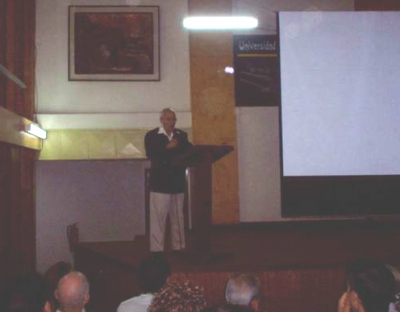
El ISCF "Manuel Fajardo" de La Habana lleva a cabo el I Evento Científico Tecnológico de la Actividad Física y el Deporte.

Impartiendo una conferencia Magistral: La Preparación Psicológica del Deportista para las competencias deportivas: Un enfoque en valores.

Saludos,

Ucha

Amantes del Fútbol

Amantes del Fútbol

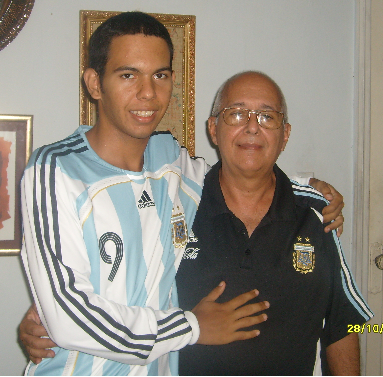
Con mi hijo menor. Antonio Francisco García Delgado.

Saludos a AFA y a todo el Fútbol.

Ucha